Attic Moisture in Michigan Winters
When warm, moist air from the house reaches a cold attic, it condenses and freezes on the roof deck. In spring it can look a lot like a roof leak.
Request a rooferWhere the moisture comes from
Showers, cooking, laundry and even breathing put water vapor into the air. Gaps in the ceiling let it rise into the attic.
Signs
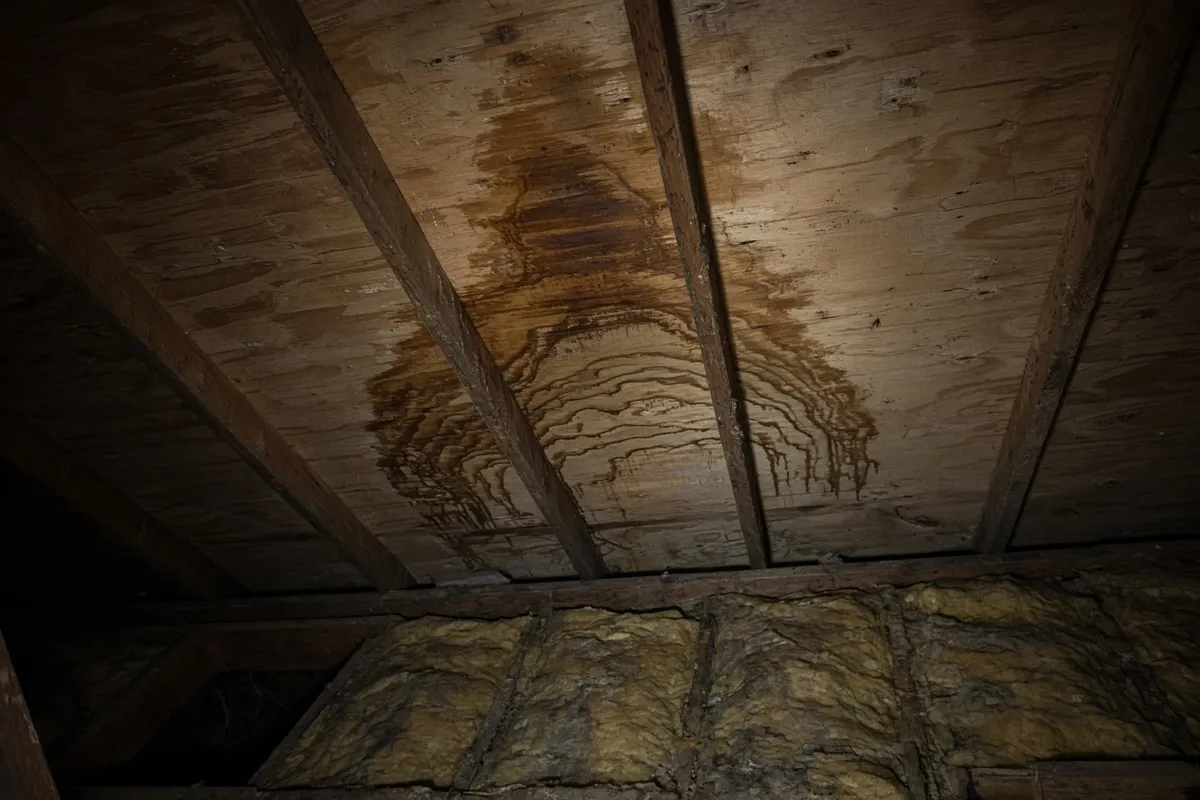
Frost on nails and decking in winter, dark stains on the underside of the roof, damp insulation and a musty smell.
Bath fans
Make sure fans vent to the outside through a roof or wall cap, not into the attic.
Air sealing
Seal gaps around recessed lights, wiring holes, plumbing stacks and the attic hatch.
Ventilation
Open soffits and a ridge vent let cold, dry air carry moisture out.
Humidifiers
Whole-house humidifiers set too high in winter can add more moisture than the attic can handle.
Mold
If mold appears on the deck, fix the moisture source first, then clean or replace affected wood.
Next
See attic ventilation.
Kitchen fans
Range hoods should vent outside too. Recirculating hoods don't remove moisture.
Insulation depth
Thin or uneven insulation lets more warm air reach the deck. Topping it up helps both moisture and ice dams.
Check after cold snaps
After a run of nights near or below zero, take a flashlight into the attic on a mild afternoon. Frost turning to water on the nails is easy to spot then, and it tells you whether air sealing is working.
When to get help
If the deck is stained across large areas, the insulation is matted and damp, or the smell is strong, have a roofer look at ventilation and the deck together.
More roofing guides
Roof trouble in Lansing?
Send a request and a roofer will get in touch. Requests answered 7 days a week.
Prefer email? [email protected]