Checking Your Roof After a Mid-Michigan Storm
Most of Lansing's yearly rain falls in the warm months, often in strong thunderstorms with gusty winds and sometimes hail. Here's how to check the roof safely afterward.
Request a rooferStart from the ground
Walk around the house and look for shingles in the yard, lifted edges, dented gutters and debris on the roof. Binoculars help.
Check the attic
Look for daylight, wet spots on the decking or damp insulation.
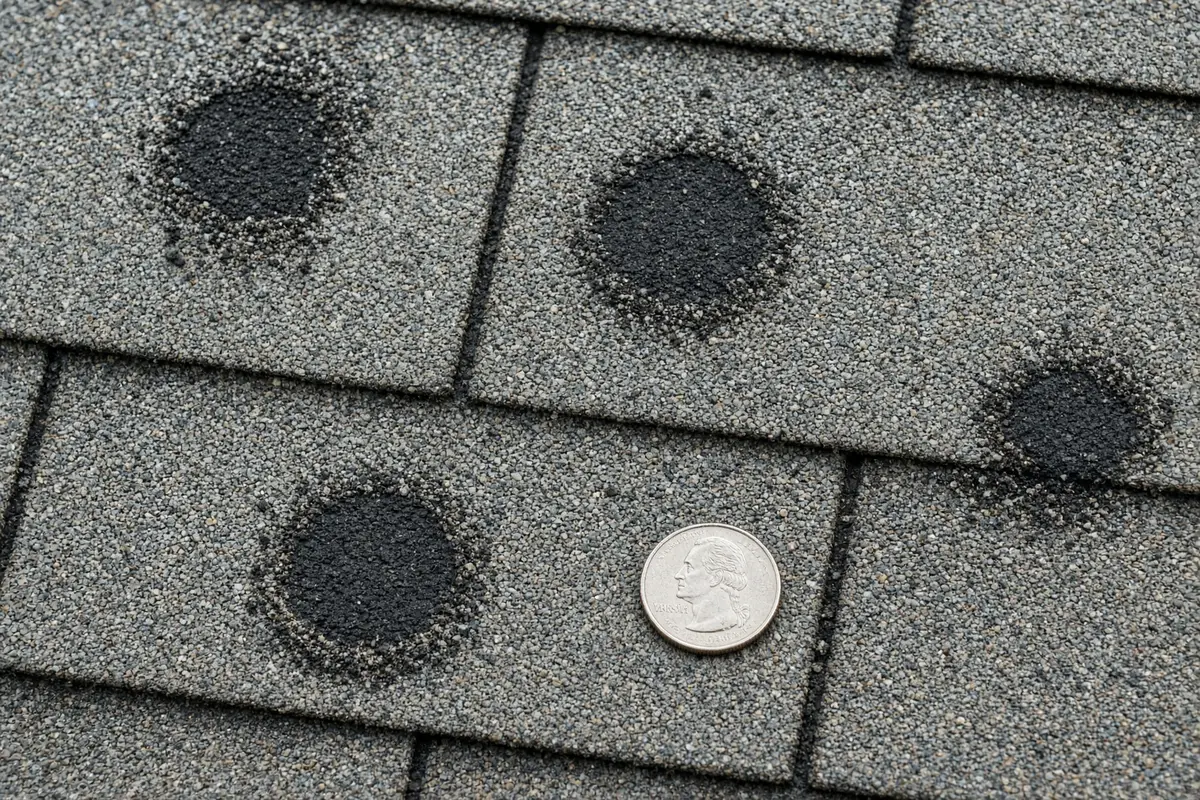
Hail signs
Dents in gutters, downspouts, vents and window screens suggest the roof was hit too.
Trees
Look for broken limbs resting on the roof or hanging over it.
Inside
Check top-floor ceilings and around skylights and chimneys for new stains.
Photos
Take photos before cleanup for your records and any insurance claim.
Temporary cover
If water is coming in, a tarp put on by a professional limits damage until repairs.
Next
Siding and windows
Hail and wind damage to siding, window screens and outdoor equipment is a clue the roof may have been hit as well.
Don't climb up
Wet shingles are slippery and storm-damaged roofs may be weak. Leave the close inspection to a roofer.
Gutters and downspouts
Bent or detached gutters can send water against the foundation. Fix them soon after the storm, before the next heavy rain.
When damage isn't visible
If neighbors are having roofs replaced after a hailstorm, it is worth having yours checked even if nothing looks wrong from the ground.
Keep a storm log
Write down the date of each major storm and what you found. It helps with claims and shows a roofer how the roof has held up over time.
More roofing guides
Roof trouble in Lansing?
Send a request and a roofer will get in touch. Requests answered 7 days a week.
Prefer email? [email protected]